
You refreshed the content. You added the FAQ blocks, tightened the structure, published the update. Now what? Most small agency owners have no routine for checking whether any of it actually shows up when someone asks ChatGPT or Perplexity a relevant question, and Google Search Console won’t fully answer that for you either. This is the last mile of a content refresh: a small, repeatable way to see whether the work is landing.
How do you actually track whether you show up in AI answers?
Two ways, and for a solo operator you’ll likely use both: manual prompting, and a small named tool. Manual means typing real buyer questions into ChatGPT or Perplexity yourself and logging what comes back; it’s free, slow, and gives you full control over which questions you ask. Named tools automate that process across a set schedule and give you trend lines without the manual logging, at a monthly cost. Neither replaces the other. Manual is where you start; a tool is what you add once you know which questions are worth tracking on repeat.
What should you actually measure?
Keep it to a small, defensible set: are you cited at all, how you’re described, who’s cited instead of you, and on which platforms. Resist the urge to build a forty-metric dashboard before you’ve even confirmed the brand appears anywhere. These four answer the only questions that change what you do next.
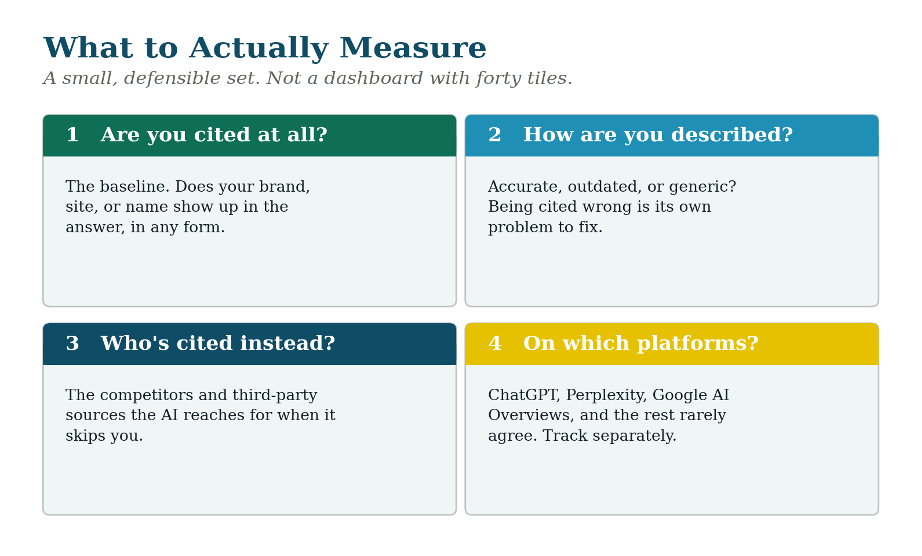
Figure 1. If a metric doesn’t point to an action, leave it off the list.
Aleyda Solis, whose 3-layer measurement framework is one of the more rigorous public treatments of this problem, puts a related principle well: “look for patterns over time, not single-run results, because AI outputs vary by session and platform. A single run is an anecdote; a sample is a signal.” That’s the honest caveat underneath everything in this article: AI answers are non-deterministic, so the same prompt run twice can return two different results. You are never tracking a fixed ranking. You’re tracking a pattern that only becomes visible after repeated runs.
Which tools are worth paying for at your size?
A handful of tools are genuinely built for a solo operator’s budget; most of the well-known SEO platforms are not, once you add their AI modules. The table below is drawn from our own comparison research on tools suited to individuals and small teams, current as of May 2026.
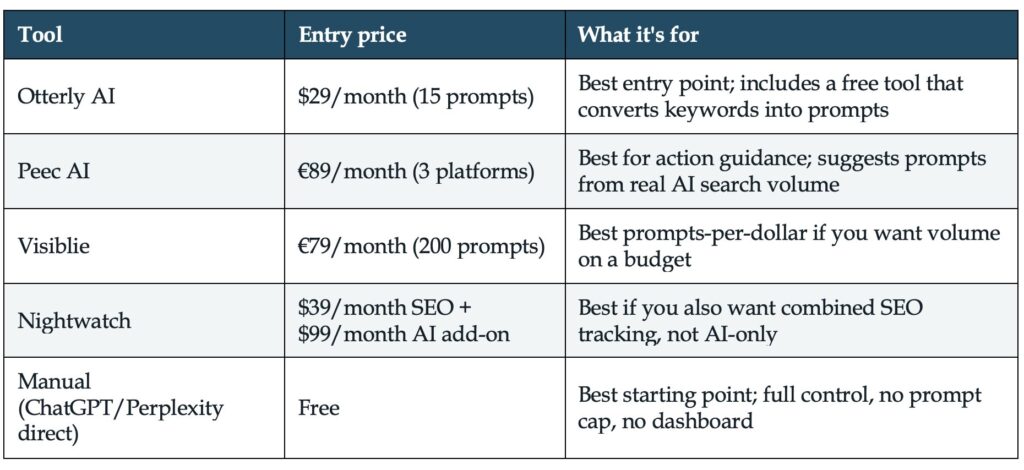
One caution worth repeating from that research: prices in this category move fast, and per-engine or per-seat add-ons can multiply the headline price two to three times over. Confirm current pricing before buying anything.
Does Google Search Console help here?
Mostly no, and that’s a common source of frustration. GSC has historically folded AI Overview impressions into general web search performance without breaking them out, which makes it nearly impossible to isolate AI-driven visibility from the standard Performance report. Worth flagging: Google began rolling out a separate Generative AI report in Search Console in June 2026, showing AI Overview and AI Mode impressions on their own. As of this writing it’s live only in a small number of countries, shows impressions only (no clicks, CTR, or queries yet), and is not yet available broadly. Useful to watch, not yet something to build a routine around.
What’s a realistic minimum viable tracking routine?
Five prompts, on two platforms, once a month, beats an ambitious monitoring plan you’ll abandon by week three. Pick the two platforms where your prospective clients are actually asking questions, most likely ChatGPT and Perplexity for a B2B services audience, and write five prompts that reflect Stage 2 and 3 of the search journey (comparison and decision), not generic top-of-funnel questions you’d use for keyword research.
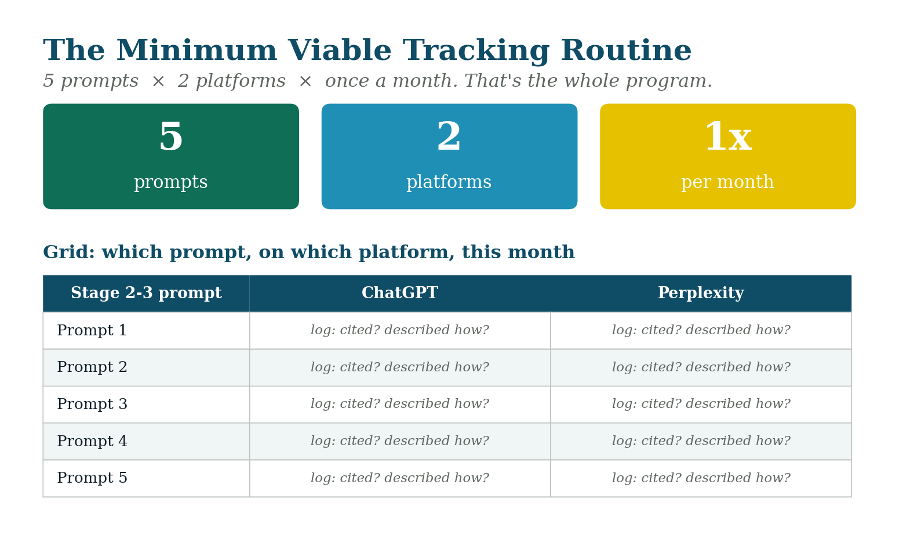
Figure 2. A spreadsheet grid you fill in by hand is a complete tracking system at this scale.
Example Stage 2 and 3 prompts for a small B2B agency:
- “What should a small business look for when choosing a B2B marketing agency in [region]?” (comparison, Stage 2)
- “[Your agency name] vs [a named competitor]: which is better for a small B2B services company?” (comparison, Stage 2)
- “Best marketing agencies for a 10-person B2B consulting firm” (shortlist, Stage 2-3)
- “Is [your agency name] a good fit for a company with a small marketing budget?” (decision, Stage 3)
- “What does it cost to hire a B2B marketing agency, and is it worth it for a small company?” (decision, Stage 3)
Building a prompt set that actually reflects how buyers ask, rather than keywords stretched into question form, is its own skill. Aleyda Solis’s companion piece, How to Build a Representative AI Search Prompt Library for Better AI Visibility Measurement, walks through sourcing prompts from real buyer language instead of guessing; worth the read once you’re ready to expand past five.
Why will the same prompt give different answers each time?
Because the models generating these answers are non-deterministic by design, not because your tracking is broken. Even at low randomness settings, the way these systems batch and process requests introduces variation run to run. Practically, that means one check of one prompt tells you almost nothing. Log five runs across a month and you start seeing a pattern: cited three times out of five, described accurately twice, generic once. That pattern is the actual signal.
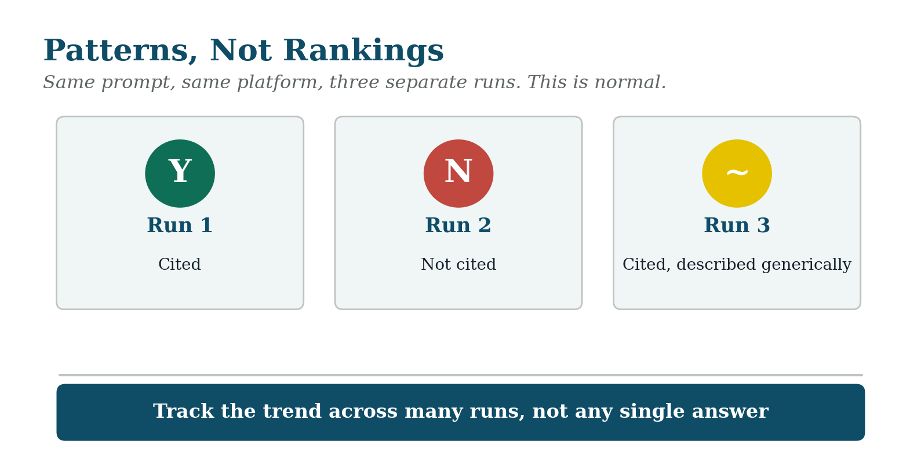
Figure 3. Three runs of one prompt. None of them alone tells you anything reliable.
“I’ve got a good content marketing groove, regular blogs, podcasts, videos, but I have no idea if they’re actually reaching my target audience.” — A small agency owner, on why this tracking step exists at all
Keeping this sustainable
The whole point of five prompts on two platforms is that you’ll actually run it. A 100-prompt tracking program sounds thorough and gets abandoned by the second month. Block 30 minutes once a month, run the five prompts on both platforms, log cited or not and how you were described, and move on. Expand later if the signal is strong enough to justify it, not before.
Frequently Asked Questions
Do I need a paid tool to start tracking AI visibility?
No. Manually running five prompts on two platforms once a month is a complete starting routine and costs nothing beyond your time.
How many prompts do I actually need for a reliable signal?
Enterprise frameworks often recommend 50 to 100+ prompts across personas and journey stages. For a solo operator, 5 to 15 well-chosen, high-intent prompts is enough to start seeing a usable pattern.
Will Google Search Console show me AI Overview clicks?
Not yet, and not fully once it does. Google’s new Generative AI report (rolling out from June 2026) shows impressions only, no clicks or queries, and isn’t available everywhere yet.
What counts as being “cited” in an AI answer?
Any appearance counts as a data point, but treat a clickable link, a named recommendation, and a passing mention as three different outcomes, not one. How you’re described matters as much as whether you appear.
Should I track ChatGPT and Google AI Overviews the same way?
No. Track platforms separately. Interfaces, source behavior, and link treatment differ enough between platforms that blending the results hides useful signal.
How do I know if my results are representative and not a fluke?
One run is an anecdote. Run the same prompt multiple times across a few weeks before drawing a conclusion; the pattern across runs is the signal, not any single answer.
Skip the spreadsheet setup
The Website Content Refresh Edition includes the AI Visibility Tracker built to this exact routine, five prompts, two platforms, monthly cadence, already formatted, alongside the rest of the nine-step content refresh toolkit.
→ See the Website Content Refresh Edition
Related reading
- “How to Do a Website Content Refresh (Step by Step Guide)” for how this tracking step fits the full nine-step process.
- “Why Isn’t My Business Showing Up in ChatGPT?” for the diagnostic starting point this routine is built to answer over time.