
B2B SEO Persona Specifics
The WorkMatix persona is built to produce search queries, prompts and page briefs, which is a different artifact from a marketing persona. When we talk about B2B SEO personas, we’re not talking about vague avatars or “marketing Mary” stereotypes.
We’re talking about clear, data-backed profiles of real people making real business decisions; often with risk, pressure, and internal politics involved.
In B2B, SEO personas focus less on personal taste and more on:
- professional roles,
- company context,
- decision complexity,
- and how people search when their job is on the line.
What Makes B2B SEO Personas Different?
Let’s set the foundation first.
1. Smaller, More Niche Audiences. Unlike B2C, you’re not marketing to “everyone.”
You’re targeting:
- specific industries,
- specific company sizes,
- specific roles inside those companies.
That means:
- lower search volume,
- but much higher value per visitor.
2. Longer, More Complex Decision Cycles. B2B buyers don’t wake up and buy.
They:
- research,
- compare,
- validate internally,
- and revisit content multiple times.
Your persona needs content for every stage of the search journey — not just the “ready to buy” moment.
3. High-Intent Search Behavior. When B2B buyers search, they’re usually trying to solve something specific.
That’s why:
- long-tail keywords matter more than head search terms,
- intent matters more than volume.
Examples:
- “enterprise SEO platform for SaaS”
- “how to migrate website without losing rankings”
- “SEO consultant for B2B tech companies”
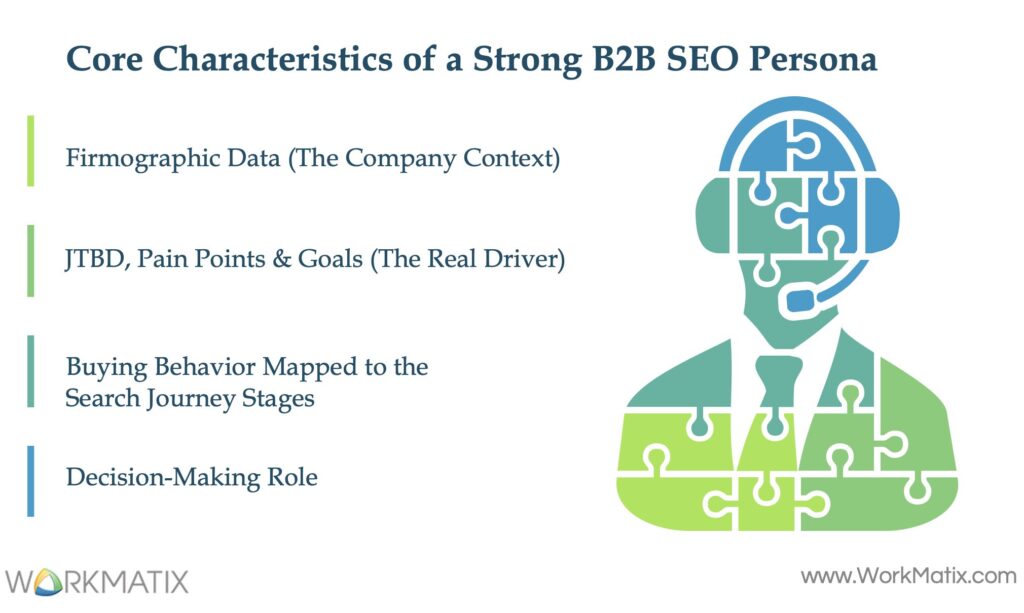
Core Characteristics of a Strong B2B SEO Persona
Now let’s break down what actually goes into a useful persona — the kind you can build content and keyword strategies around.
Key B2B SEO Persona Components
Think of these as your non-negotiables.
1. Firmographic Data (The Company Context)
This sets the stage. Include:
- Company size
- Industry
- Revenue range
- Location (important for GEO / local intent)
This helps you filter who the content is for before they even land on the page.
2. Demographics
In B2B, demographics matter less than context — but they still help.
Use them to:
- understand experience level,
- infer risk tolerance,
- and anticipate communication preferences.
3. Role Data: Job Title, Power, Responsibility
Capture:
- official job title (e.g., “Marketing Director,” “CTO”),
- level of authority,
- what they’re accountable for.
Ask yourself: “If this goes wrong, does it land on them?”
That tells you how cautious they’ll be.
4. Pain Points & Goals (The Real Driver)
This is where personas come alive.
- Pain point: inefficient workflows, poor visibility, declining traffic
- Goal: increase qualified leads, protect rankings, show ROI
Always connect pain to business consequences, not just tasks.
5. Buying Behavior Mapped to the Search Journey Stages
This is where SEO earns its seat at the table. Each persona searches differently depending on where they are in the journey.
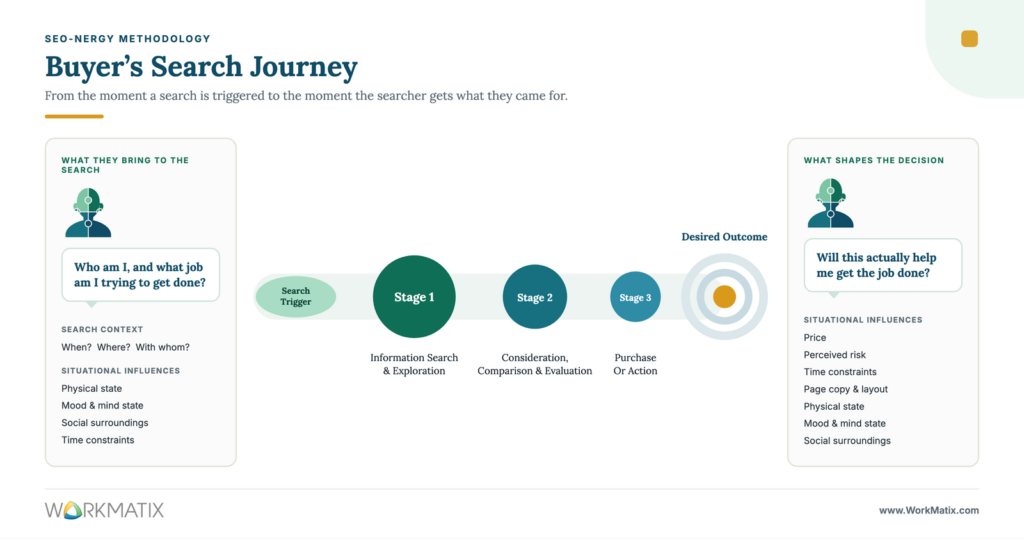
Map out:
- informational searches
(“what is technical SEO”)
- evaluative searches
(“best SEO tools for B2B”)
- comparative searches
(“SEO agency vs in-house”)
- transactional searches
(“hire SEO consultant B2B”)
6. Decision-Making Role
Rarely is there just one buyer. Identify whether they are:
- Initiators (spot the problem)
- Influencers (research and recommend)
- Decision-makers (approve and sign)
This changes how persuasive, detailed, or validating your content needs to be.
7. Information Needs (Search Intent and Content Type)
Ask:
- Are they learning?
- Comparing vendors?
- Justifying a decision internally?
This tells you whether they need:
- educational content,
- comparison pages,
- frameworks,
- or proof and validation.
Why Persona Development Is So Powerful for SEO
Here’s the big unlock. SEO doesn’t just help you reach personas — it helps you understandthem better.
With keyword research, you can:
- see what people actually ask,
- observe how language changes by stage,
- identify new objections and priorities.
- personas aren’t guesses,
- they’re grounded in real behavior.
Start Simple (Then Expand)
You don’t need 10 personas on day one. A great starting point is just three:
- The Final Authority – approves budgets and risk
- The Researcher – gathers options and information
- The Influencer – shapes internal opinion
Start with:
- broad business keywords,
- shared pain points,
- and overlapping goals.
Then refine over time using:
- SEO data,
- customer interviews,
- sales feedback.
Ready to decode your buyer persona? Get the B2B Persona Workbook Template for SEO & AI Search.
Key Takeaways
- B2B SEO personas focus on roles, risk, and decision context
- Smaller audiences = higher-value traffic
- Long decision cycles require content across the entire journey
- Long-tail, intent-driven keywords matter most
- SEO data helps validate personas, not just describe them
- Start with a few core personas and evolve them over time
A persona is only useful when it feeds something. The SEO-nergy Methodology shows what a persona feeds and why demographic personas do not feed it. Christensen’s Jobs to Be Done framework is why a persona built from demographics does not produce search behavior, and one built from a job does.